Diploma with Integrated Master
in Environmental Sciences and Engineering
Gain hands-on environmental training
Work across science and engineering
Address global environmental challenges
You graduate with a Diploma with Integrated Master’s degree (300 ECTS) aligned with the European Higher Education Area and the Bologna Process. This means your degree is transparent, comparable, and recognised across universities internationally.
The program is delivered jointly by 5 Schools at Aristotle University:
Physics, Chemistry, Biology, Mechanical Engineering, and School of Agriculture .
By studying across these fields, you build a broad understanding of environmental systems, natural processes, technology, and sustainability. Through laboratory work, field training, computational modelling and project-based learning, you develop the knowledge and skills needed to understand and address complex environmental challenges at local, regional, and global scale.

Aristotle
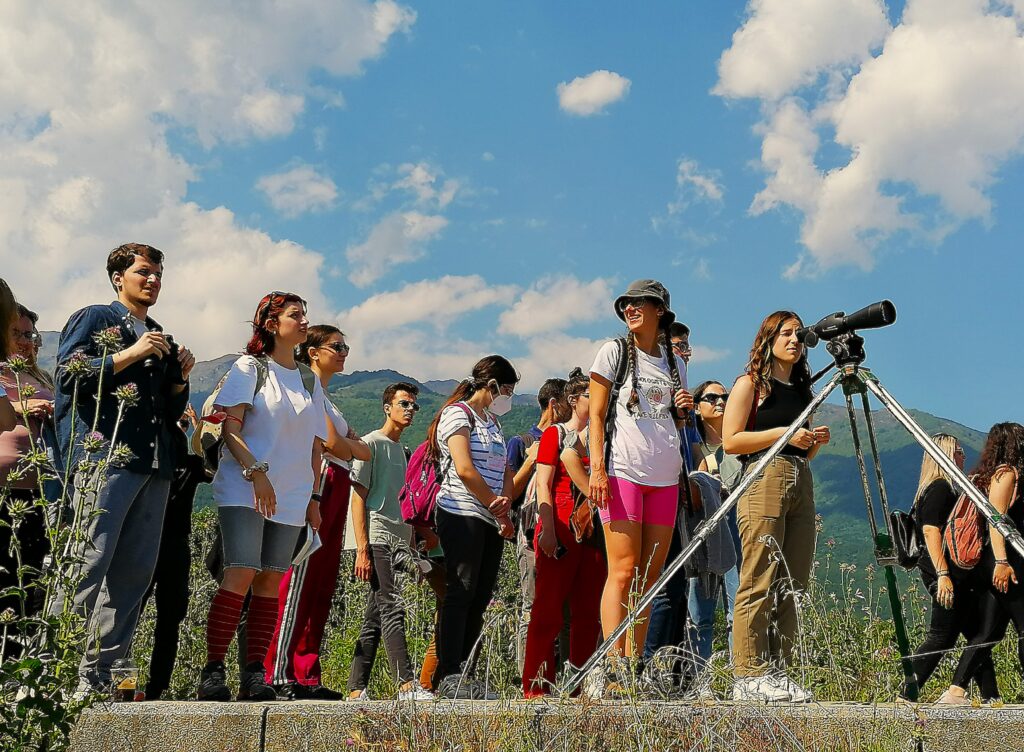
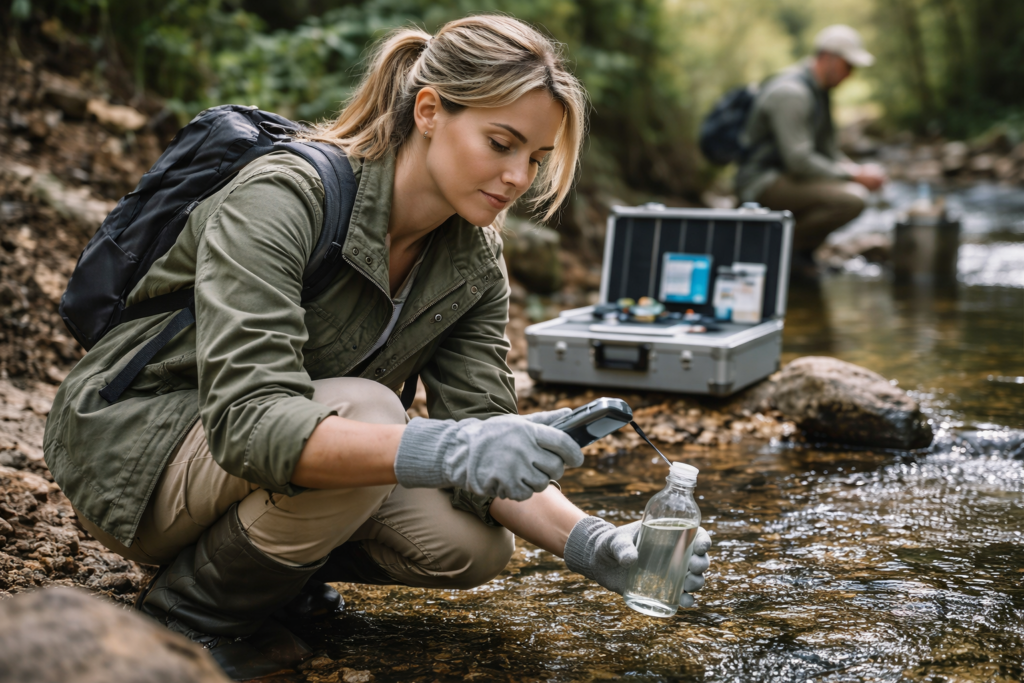
From the early semesters, your learning combines laboratory work, computational modelling and supervised field training. You work across natural and managed environments, collecting and analysing environmental data and learning how environmental systems function in practice.
As your studies progress, you engage in project-based learning and problem-driven applications. You work with real environmental systems, datasets and case studies that become more complex throughout the program. This progression helps you develop both scientific understanding and engineering competence, preparing you to address environmental challenges at local, regional and global scale.
Built on the long-standing research and academic strength of Aristotle University in environmental science and engineering, supported by large-scale infrastructure and real-world environmental settings.
At AU, you gain:
Integrated science and engineering education
A 5-year Diploma with Integrated Master that combines Environmental Sciences and Environmental Engineering in a single, coherent academic pathway.
Structured, practice-based learning from the early semesters
Laboratory training, computational modelling and fieldwork are embedded throughout the program, progressively leading to applied, project-based environmental problem-solving.
Access to advanced laboratories and field infrastructure
Including physics, chemistry, biology, agriculture and engineering laboratories, experimental fields, environmental monitoring systems, GIS and remote sensing tools.
Learning in real environmental contexts
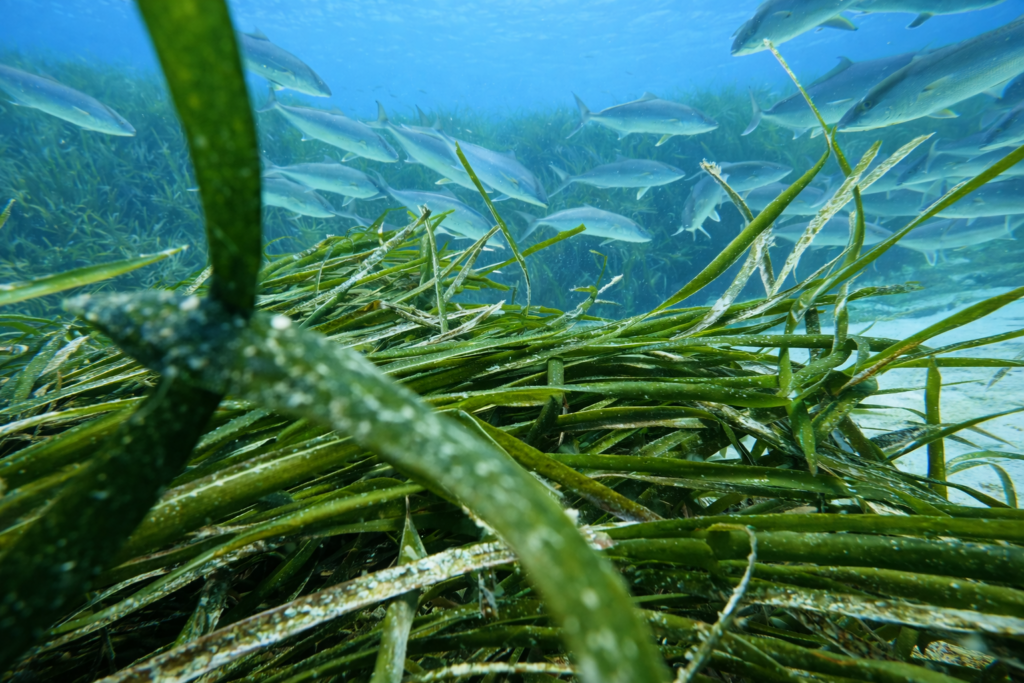
Field training in natural and managed ecosystems, with direct exposure to climate, environmental stress and sustainability challenges in the South-Eastern Mediterranean.
Strong research environment of a public research-driven respectable university
Teaching is closely linked to internationally recognised research groups, offering students early exposure to the latest scientific developments, data-driven analysis and applied environmental research.
You learn from five Schools. Each contributes a different scientific perspective.
Together, they help you understand how environmental systems function, change, and can be managed sustainably.
The program offers a strong foundation in environmental science and engineering. You learn how natural systems function, how environmental challenges are analysed and addressed, and how sustainable solutions are designed to protect ecosystems and resources. Below, you can explore the main study areas that shape your studies.
Your learning follows a clear progression, moving from scientific foundations to applied environmental and engineering practice.
Graduates of the Diploma with Integrated Master in Environmental Sciences and Engineering earn a degree aligned with the European Higher Education Area (EHEA).
This means your qualification is recognised across European higher education systems and supports both professional and academic pathways in environmental science and engineering.
The 5-year integrated structure provides a coherent learning experience, preparing you to continue with postgraduate studies, research, or professional roles in environmental and sustainability-related fields. The international relevance of the degree is also supported by the academic reputation and research strength of Aristotle University and its participating schools, which are regularly represented in international rankings and research assessments in fields related to environmental science, engineering, energy and sustainability.
Imagine yourself analysing environmental systems. Studying how climate, ecosystems, and technology interact to shape our planet. This degree prepares you for careers in environmental science, sustainability, environmental engineering, and natural resource management. You may work in environmental organisations, research institutions, consulting companies, or public agencies working on environmental policy and sustainability. You can also continue with postgraduate or doctoral studies in Greece or abroad. You graduate ready to work in environments where science, technology, and environmental responsibility meet.
A leading university in Europe
• The largest university in Greece
Aristotle University hosts one of the biggest academic communities in Southeast Europe, bringing together thousands of students, researchers and faculty across many scientific disciplines.
• A strong research tradition
Research and innovation play a central role in the University’s academic life, supporting scientific discovery and technological development in many fields.
• A degree recognised across Europe
Programs follow the European Higher Education framework, ensuring that degrees are transparent, comparable and internationally recognised.
• An international learning environment
Students become part of a diverse academic community connected with universities, research centres and international collaborations around the world.
For thousands of students each year, Thessaloniki becomes more than a place to study — it becomes part of everyday life. Located by the Aegean Sea and home to more than one million people in its wider metropolitan area, the city combines a strong academic presence with the relaxed rhythm of Mediterranean living. Traditions of hospitality and openness help create a welcoming environment for students from Greece and around the world. From the waterfront and the city center to nearby nature including Mount Olympus and the beaches of Chalkidiki Thessaloniki offers a setting where university life and everyday life naturally come together.
What Triggered Santorini’s Seismic Activity in 2025
Aristotle University’s Atmospheric Physics Lab at Researchers’ Night 2025 at NOESIS
The LAP Team at the 5th European Lidar Conference 2025
The Laboratory of Atmospheric Physics (LAP) team participated in the ESA Living Planet Symposium 2025.
Admission
requirements
Applicants from recognised foreign schools in Greece may also be eligible if they meet the international criteria.
Students enrolled in related programmes abroad may apply for admission to a corresponding semester
Tuition fees and detailed admission requirements are available at the Program’s website.
Necessary
documents
Consult on the Program’s website for the documents you need to submit.