100 years young
and ready to host your
academic ambition.
Explore research achievements, academic distinctions, student initiatives, and international events that shape everyday life at the University.
Here you can discover the moments, people, and activities that make up the University community.
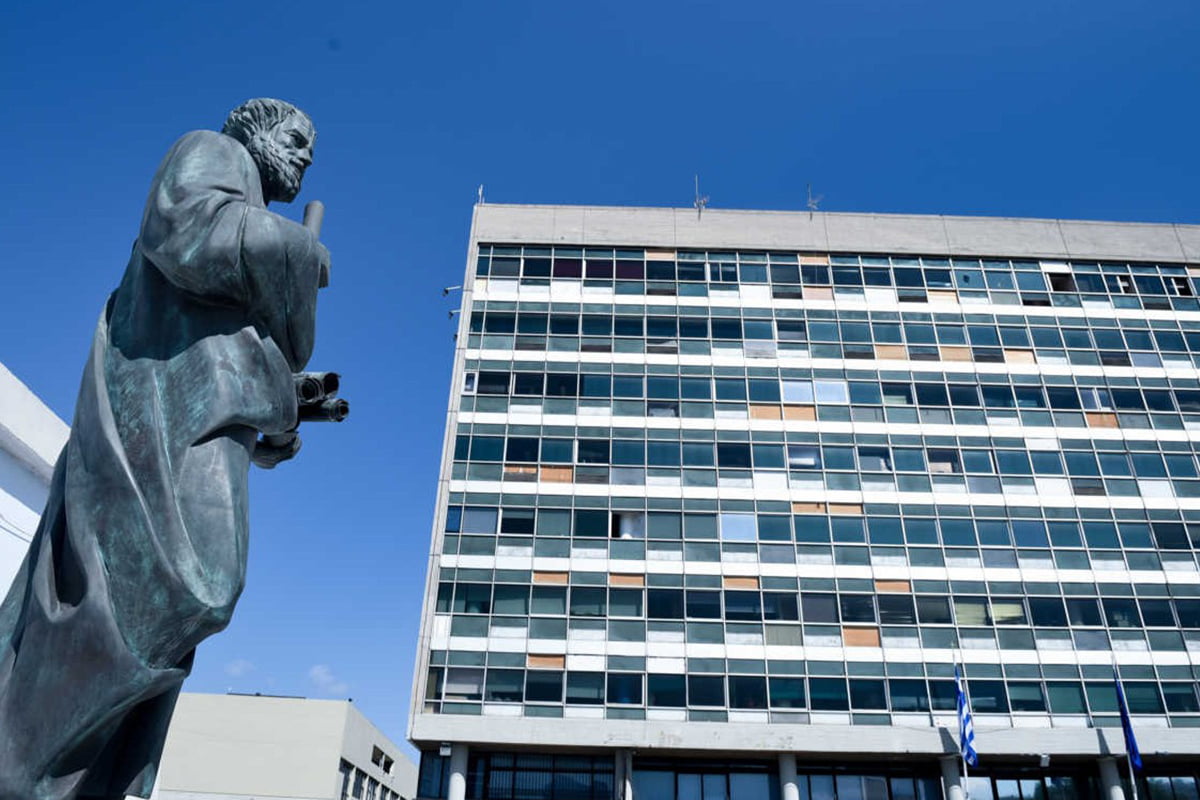
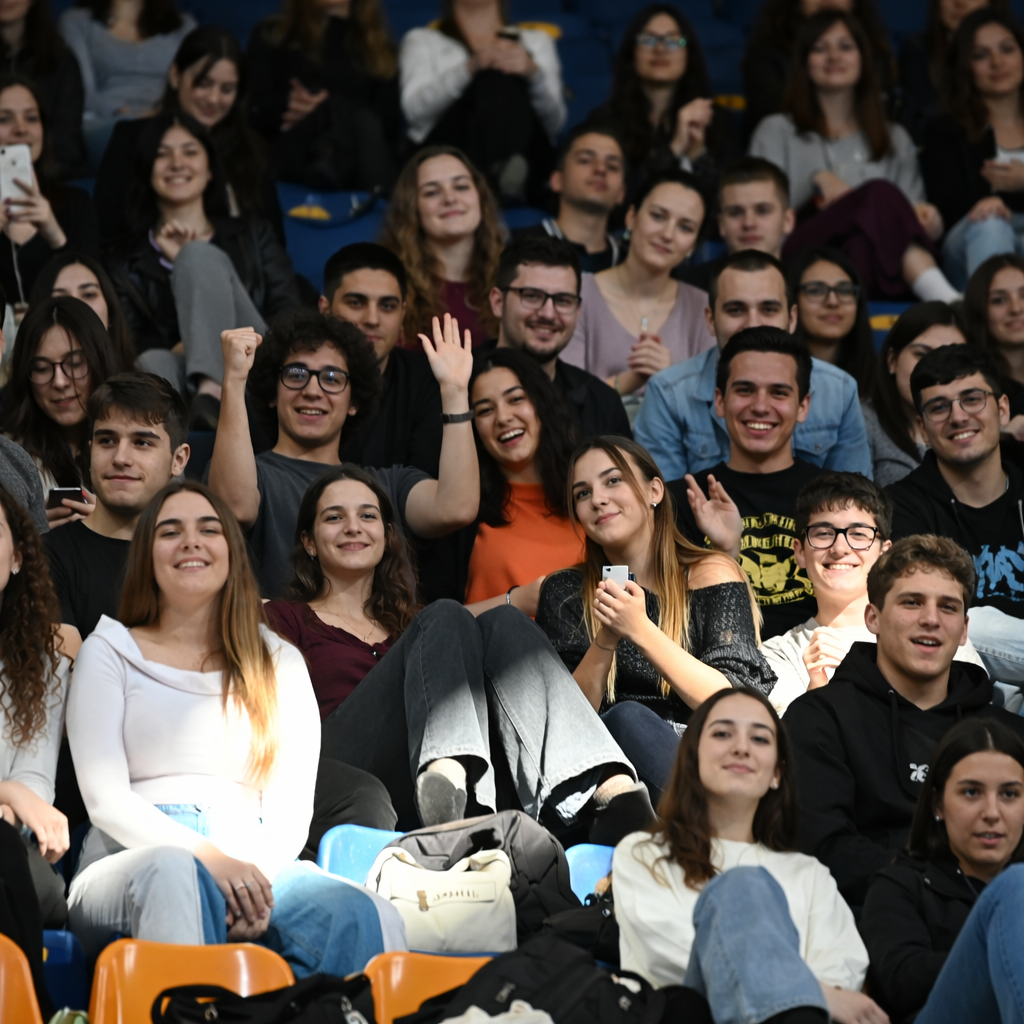
Our university is the largest in Greece and one of the biggest in Europe in size, number of faculties, and international mobility. We are the academic home to 11 faculties, almost 90,000 students and more than 19,000 outgoing and 14,000 incoming students!
Darcus Laurie, Professor in the Archaeology department at Simon Fraser University
Professor Dimitrios Ntalampelos wins prestigious ERC Starting Grant, the only awardee from a Greek University.
The Prime Minister at the AU Pavilion, during the International Thessaloniki Fair
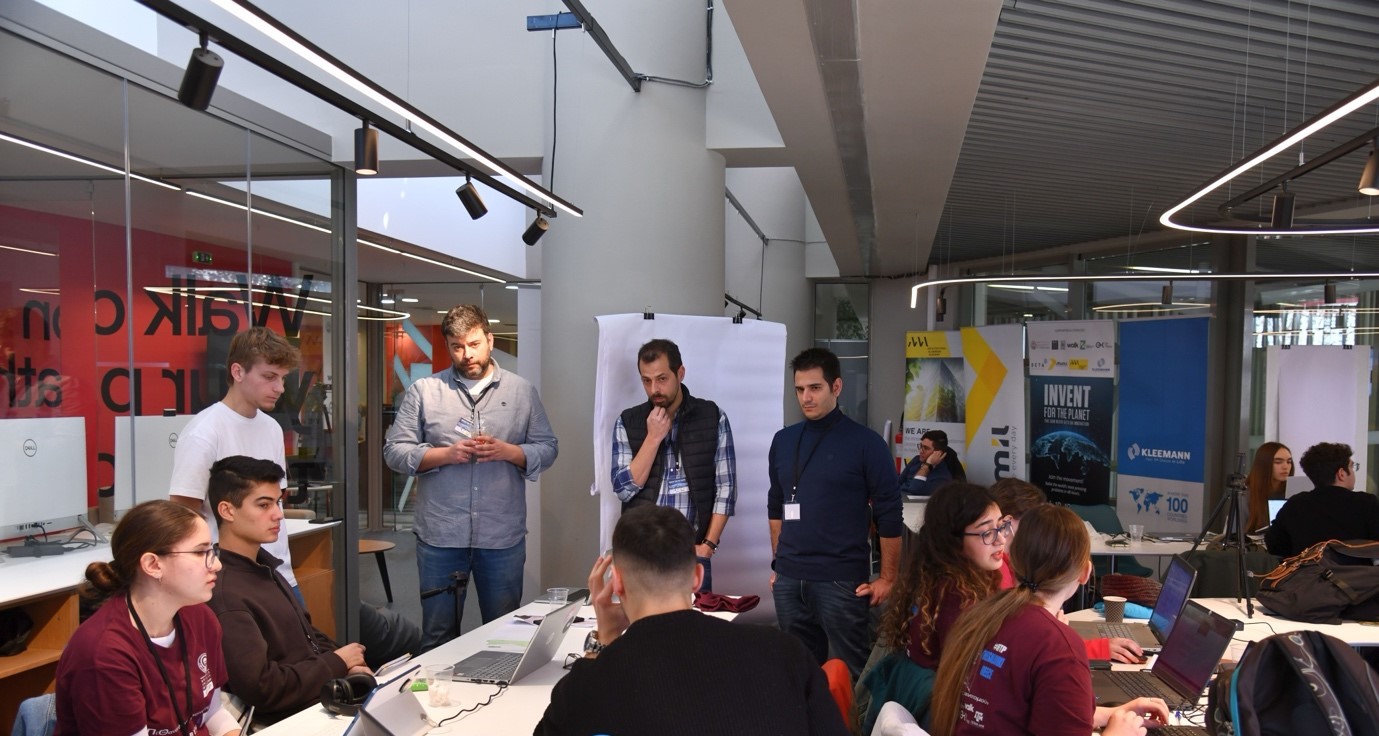
On site! Dr. Ilias Gkotsikas from our Lab of of Digital Applications in Archaeological Documentation and students in action.
AU Legal Alumni Anastasia Papadopoulou appointed New President of the Supreme Civil and Criminal Court of Greece
Archaeology: 5th Meeting of the Association for Ground Stone Tools Research hosted at AU
Darcus Laurie, Professor in the Archaeology department at Simon Fraser University
Our university is the largest in Greece and one of the biggest in Europe in size, number of faculties, and international mobility. We are the academic home to 11 faculties, almost 90,000 students and more than 19,000 outgoing and 14,000 incoming students!
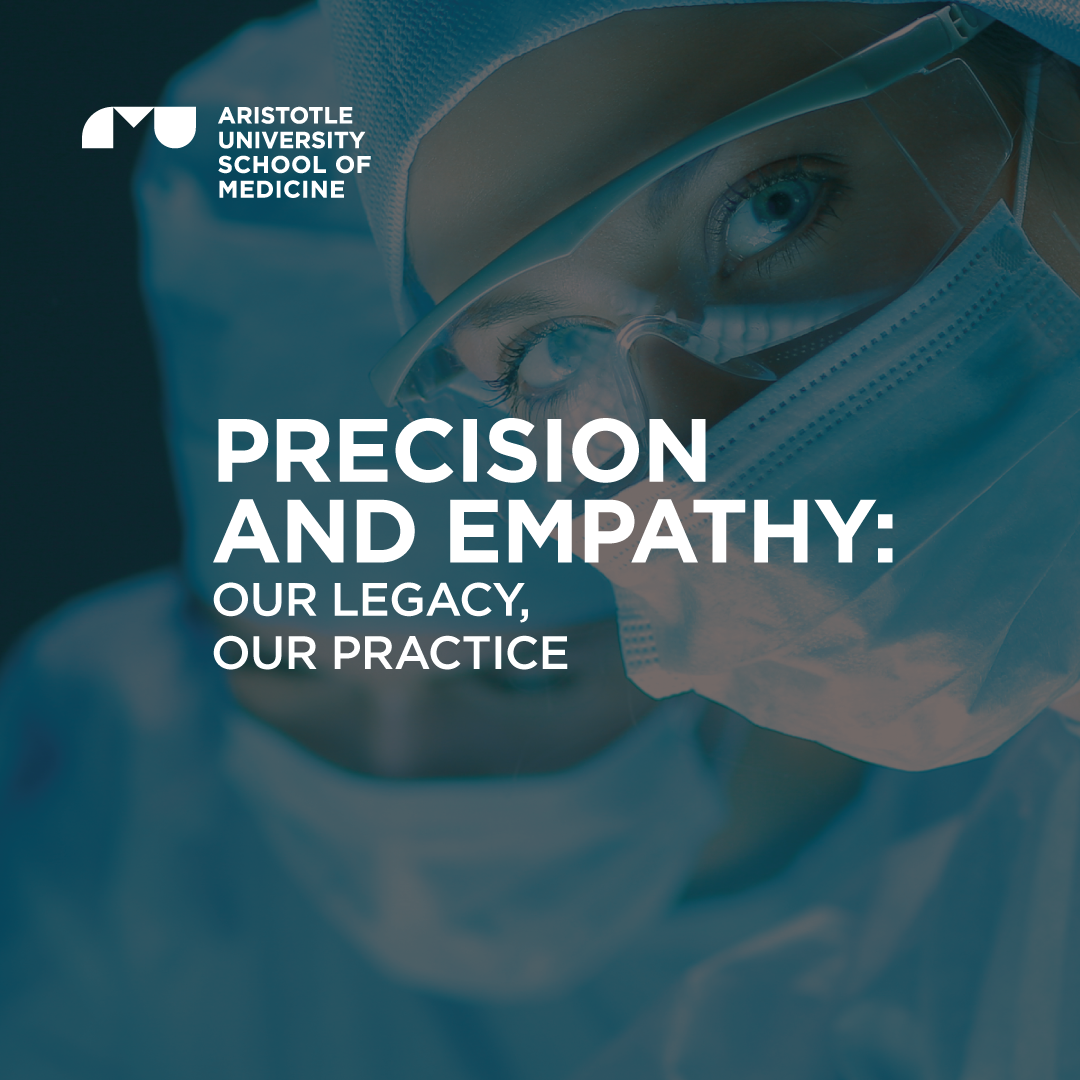
The first-ever English-language undergraduate medical program in Greece, backed by the distinguished legacy of the Aristotle University School of Medicine — 80 years of delivering well-trained doctors to the world.
AUSoM has already earned international recognition as an innovative, hands-on medical school, home to 22 laboratories, one University Hospital located on campus, and over 60 clinics across 7 hospitals.
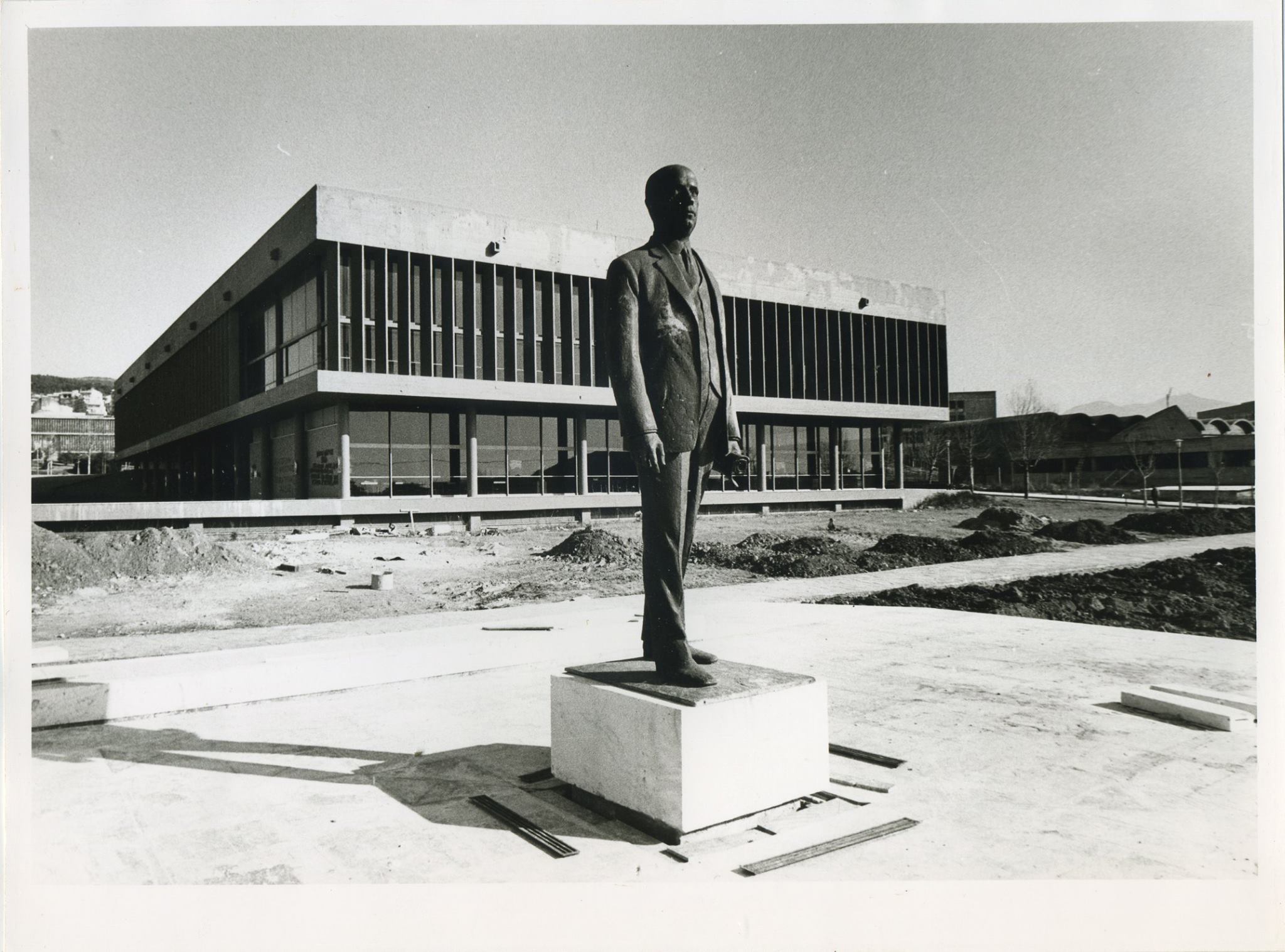
The only university campus of its size located in the very center of a European city! Students enjoy immediate access to libraries, laboratories, cultural venues, and student services, all within walking distance. At the same time, they are surrounded by the energy of Thessaloniki, a historic, youthful, and multicultural city.
Years
Undergraduate students
Postgraduate students
Faculties
Schools
Faculty members engaged in international collaborations
European
University Alliance
Erasmus+
Bilateral agreements
worldwide
PhD candidates
Incoming/ 1000 outgoing students annually
Faculty staff
Students abroad via Erasmus+
Educational organisations
& 15 student unions
Research funding
(2020–2025)
Teaching and research
staff members
As Aristotle University celebrates its centennial, we do not just safeguard its long-standing tradition and achievements, but also use this milestone as a springboard for a new beginning.” Kyriakos Anastasiadis, Rector of AU
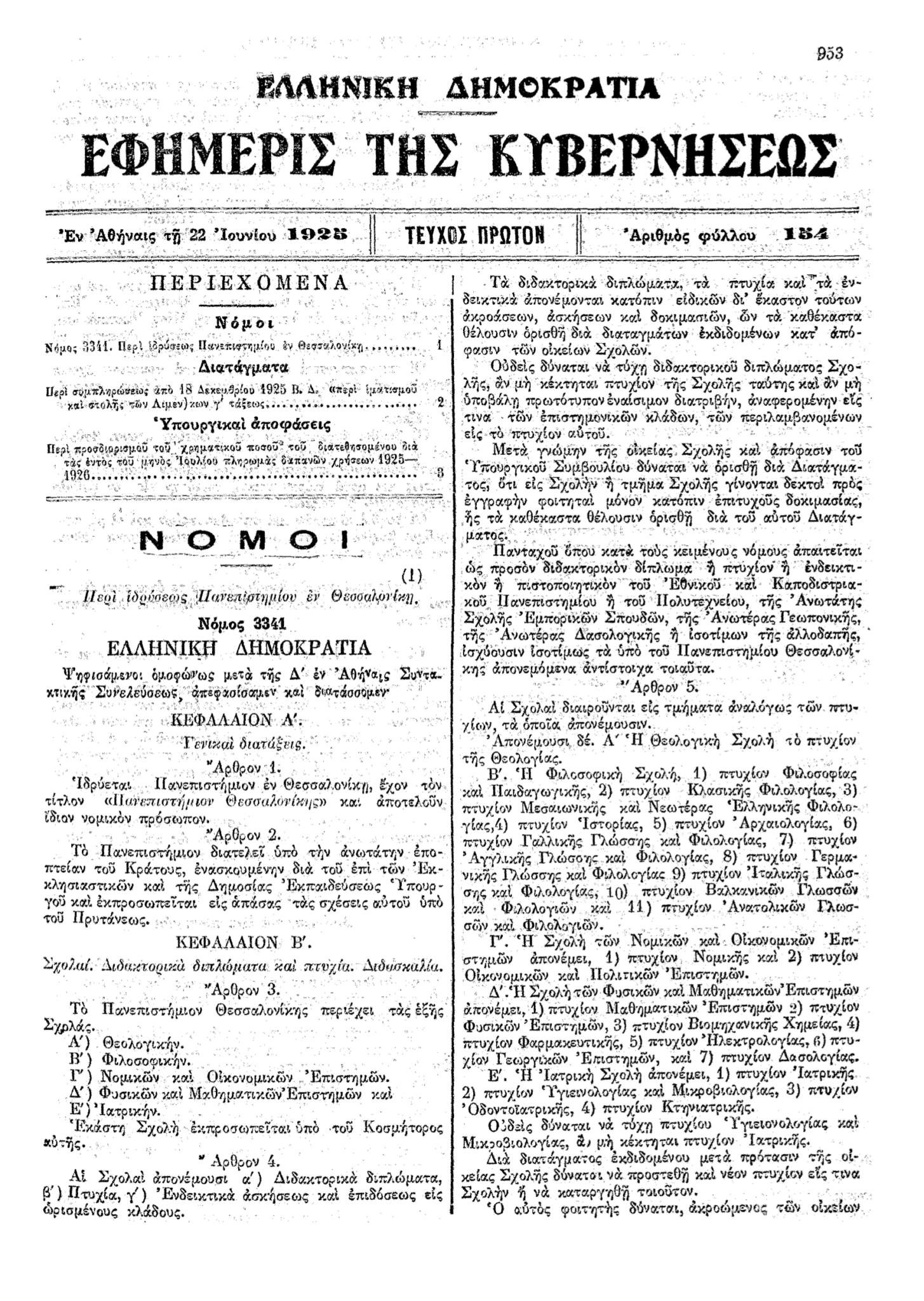
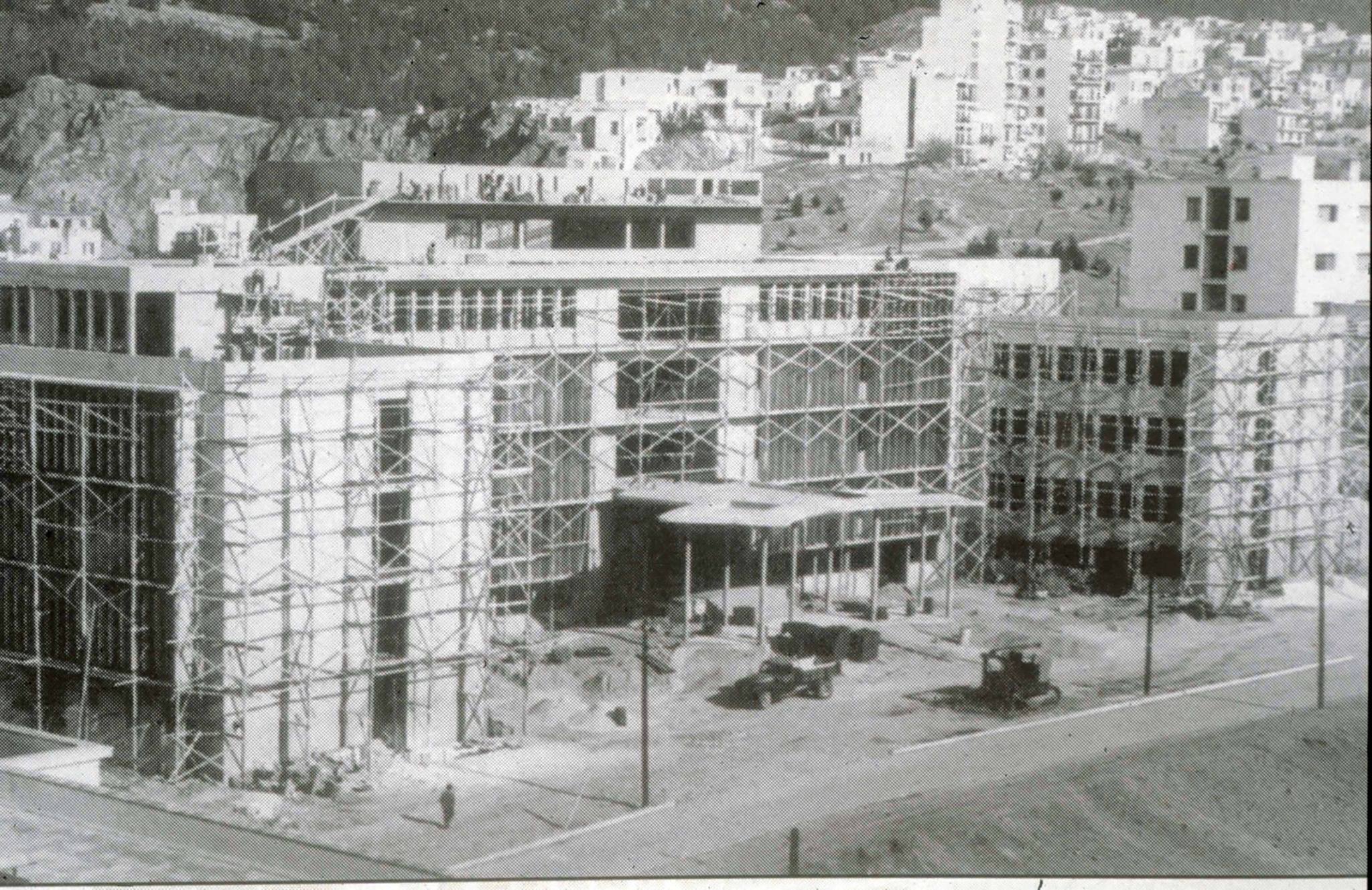
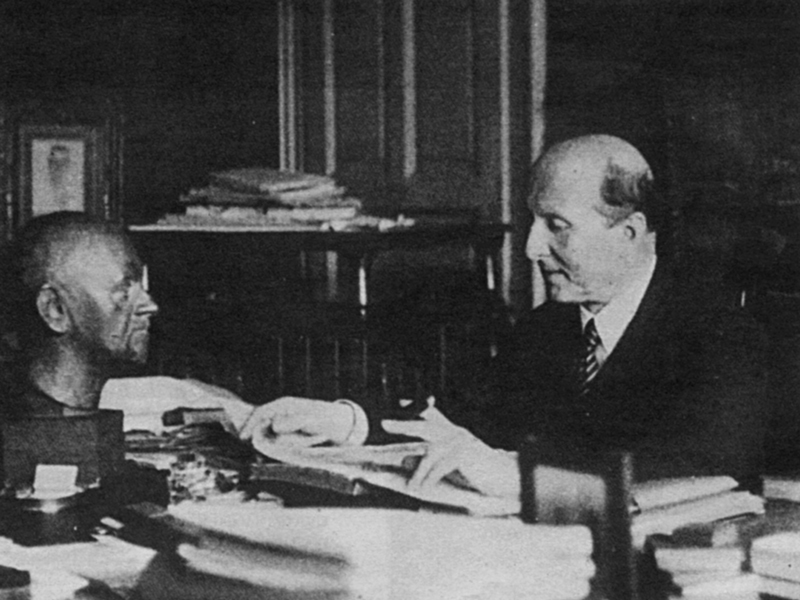
Greek Prime Minister Alexandros Papanastasiou adopts the initiative of Eleftherios Venizelos for a new university in the northern Greek regions a few years after they were liberated from the Ottomans.
The University of Thessaloniki becomes Greece’s second ever university.
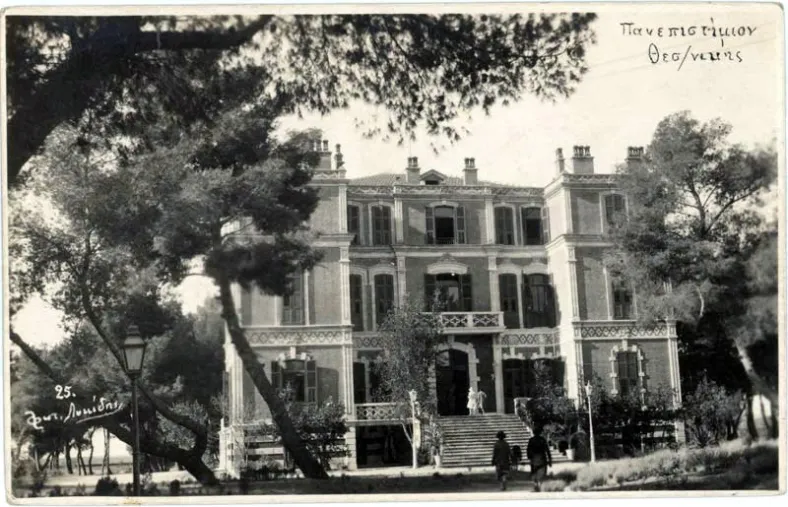
The University begins its academic operations with the Faculty of Philosophy.
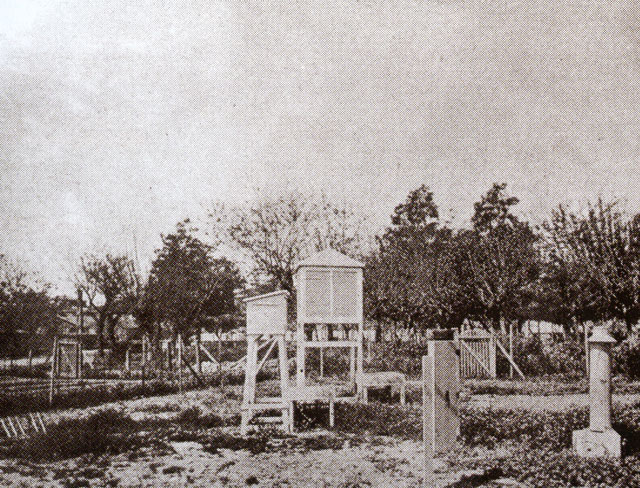
The School of Natural Sciences starts enrolling students. The Department of Forestry is transferred from Athens, the Greek capital, to the newly founded University of Thessaloniki and operates as a department of the School of Natural Sciences.
The Schools of Mathematics and Physics begin their operations as part of the Faculty of Science.
The Faculty of Law and Economics is added.
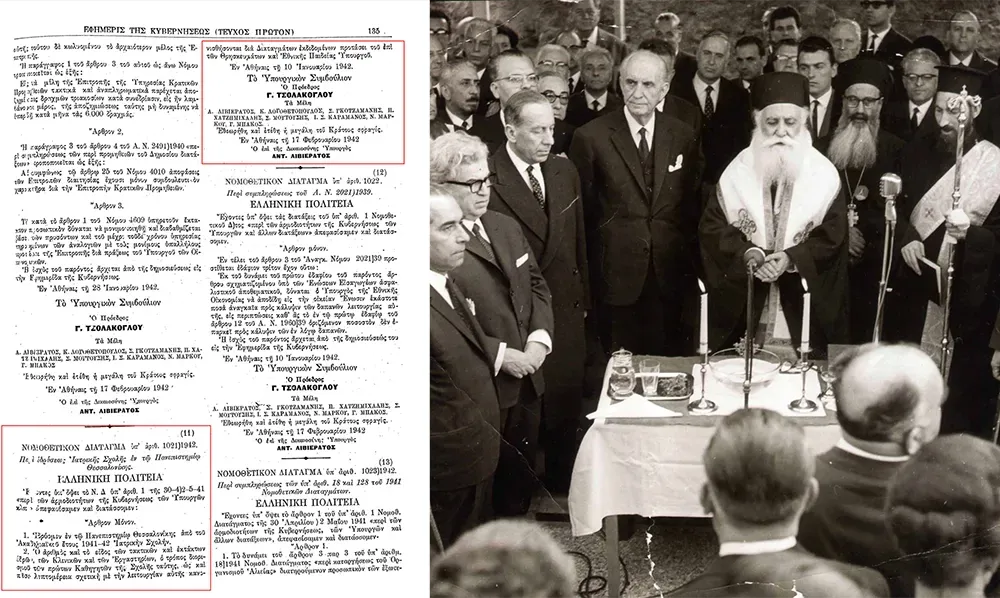
The Medical School and the Faculty of Theology begin their operations.
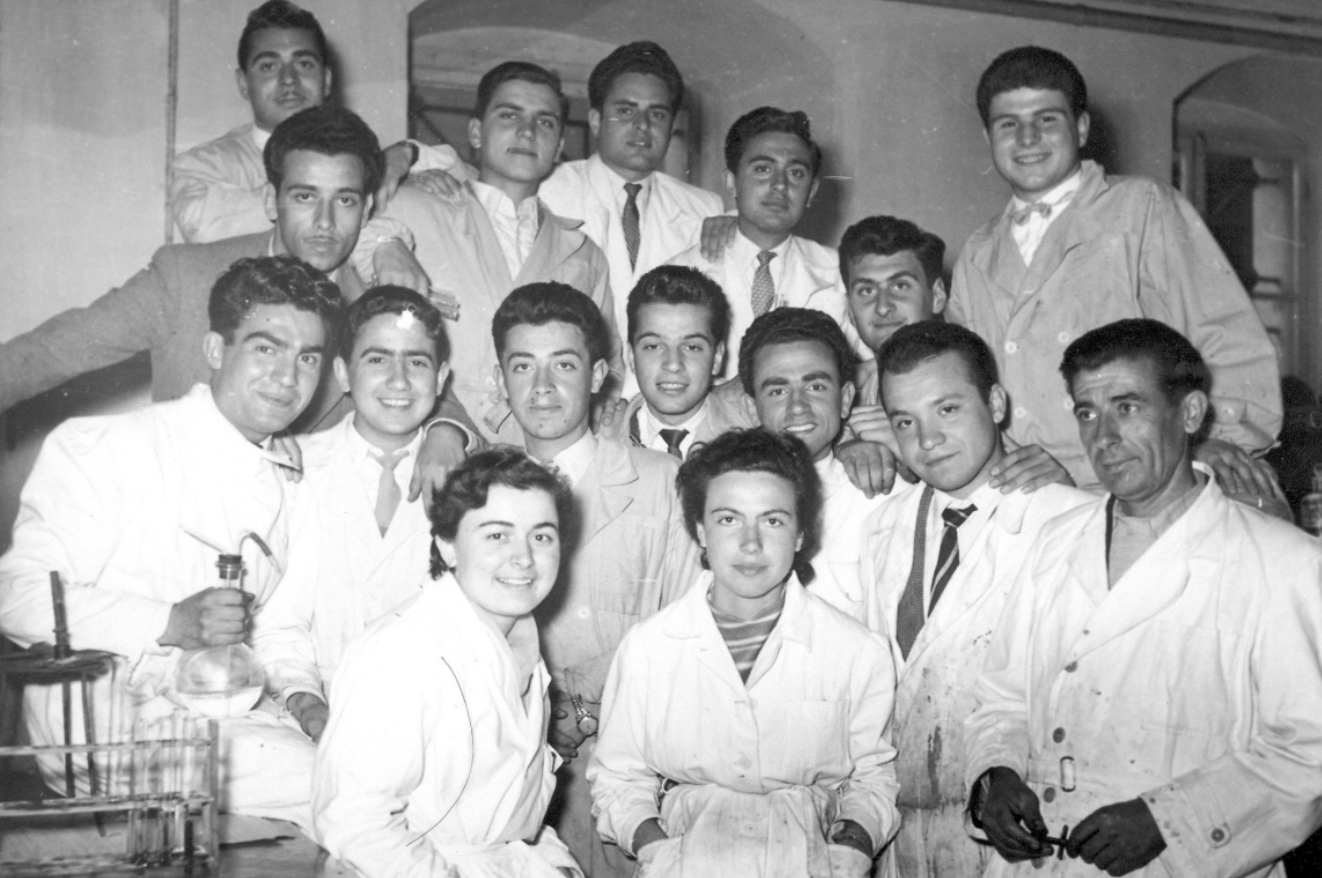
Establishment of the School of Chemistry.
1951
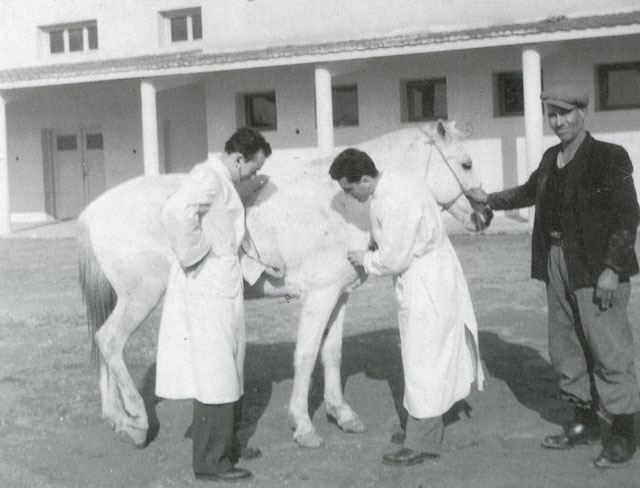
Establishment of the School of Veterinary Medicine.
1954
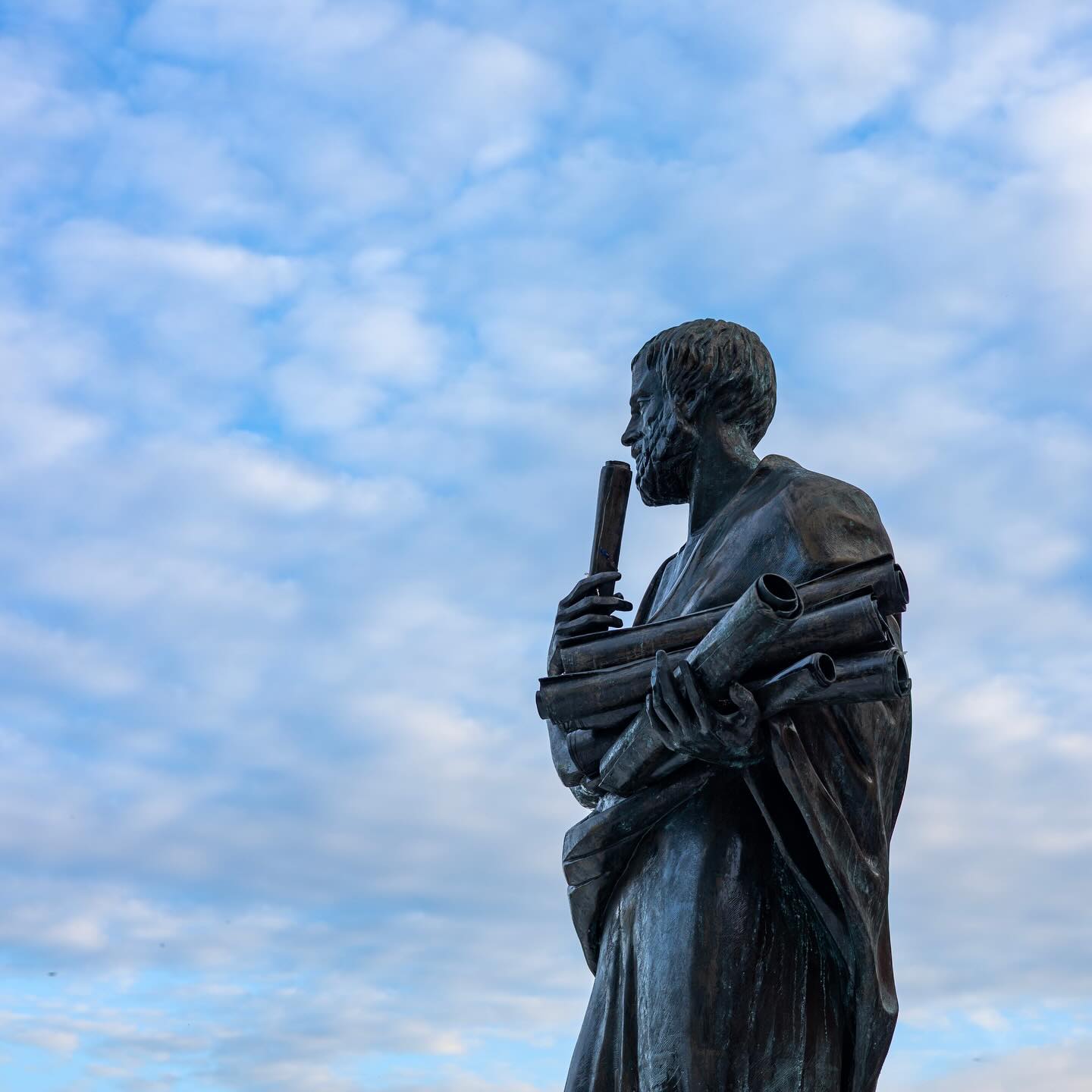
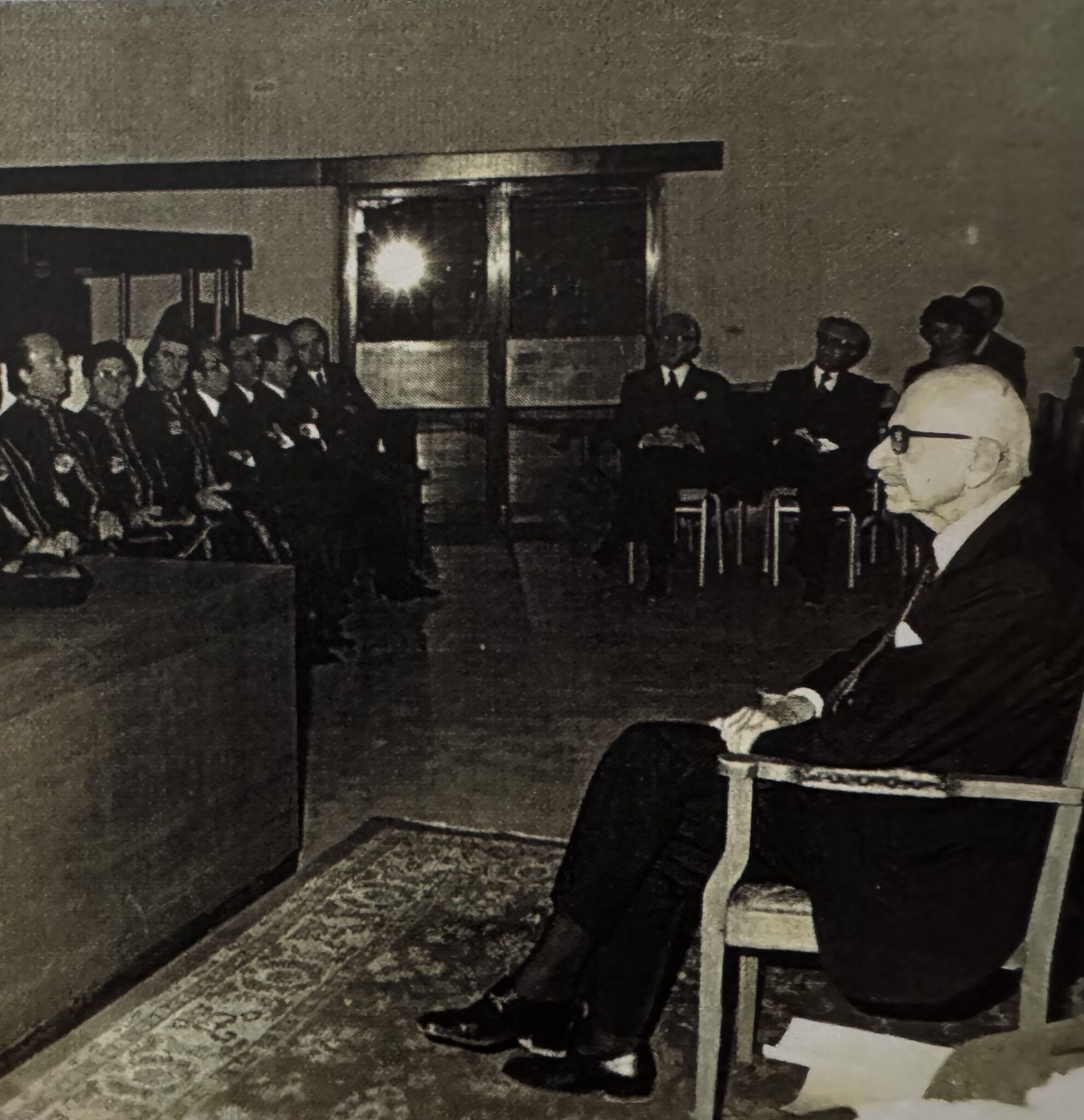
The University of Thessaloniki is renamed Aristotle University of Thessaloniki in honour of the great Greek philosopher, Aristotle.
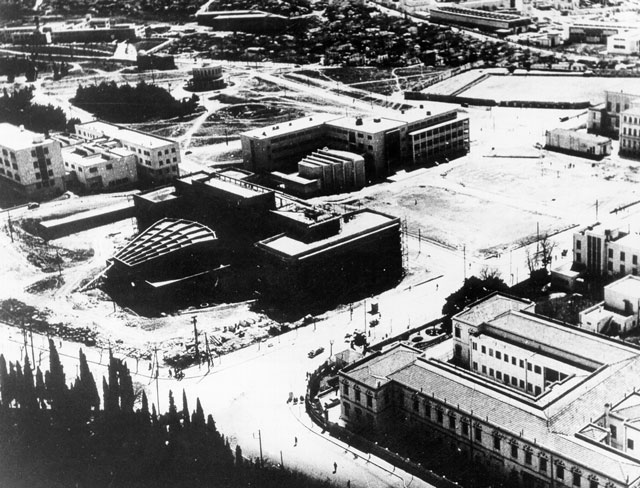
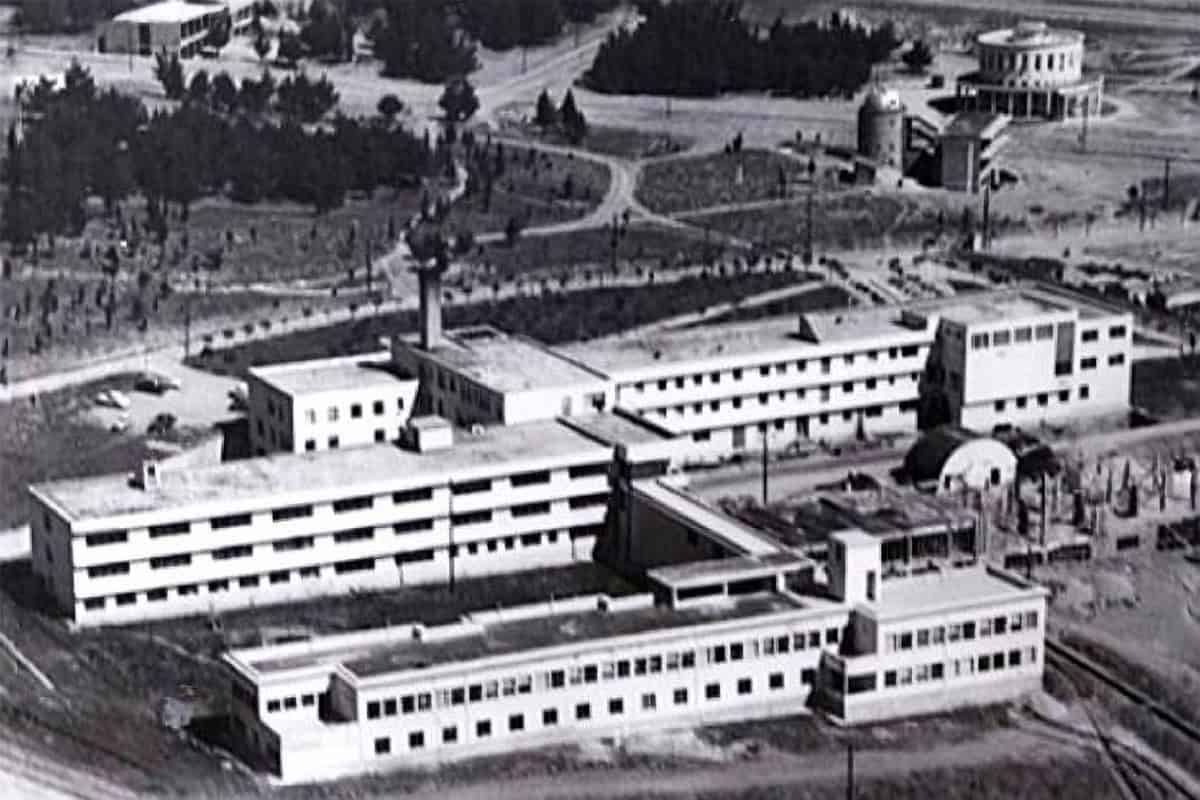
Establishment of the Faculty of Engineering and the School of Pharmacy.
Dentistry is introduced as a department of the Medical School. It will become independent School in 1971.
The first kidney transplant in Greece is performed at AHEPA University Hospital in Thessaloniki, soon to be followed by the first heart transplant in the country.
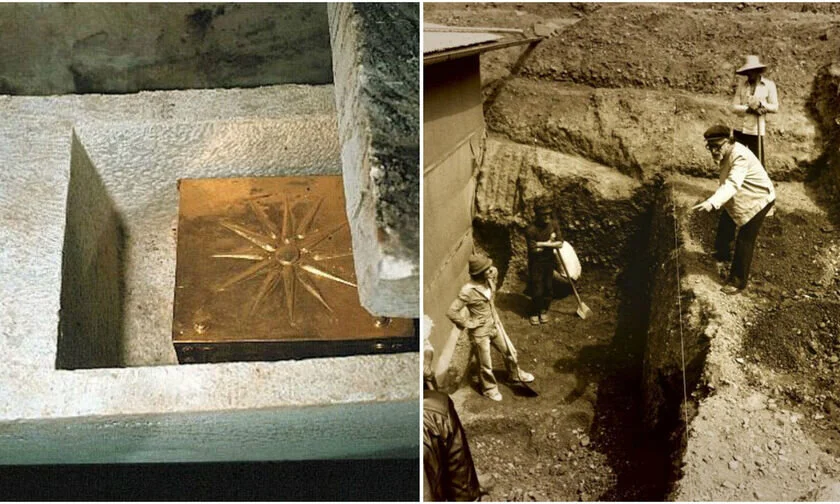
Professor Manolis Andronikos discovers the Royal Tombs of Vergina, one of the century’s greatest archaeological discoveries; Aristotle University’s international prestige in archaeology and the humanities is undisputed.
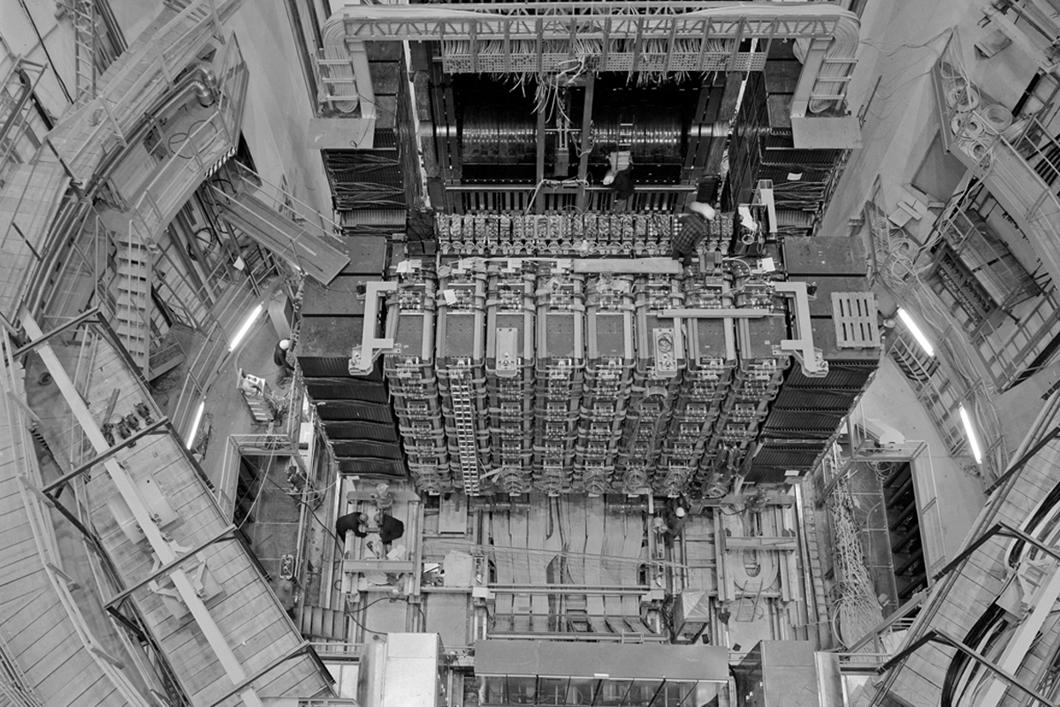
Research groups from the School of Physics participate in high-energy physics experiments at CERN, marking AU’s involvement in major international research infrastructures.
Major reorganization of Schools and Departments.
The new Faculty of Education is followed by the new School of Fine Arts (1984).
Establishment of the School of Journalism and Mass Media Studies.
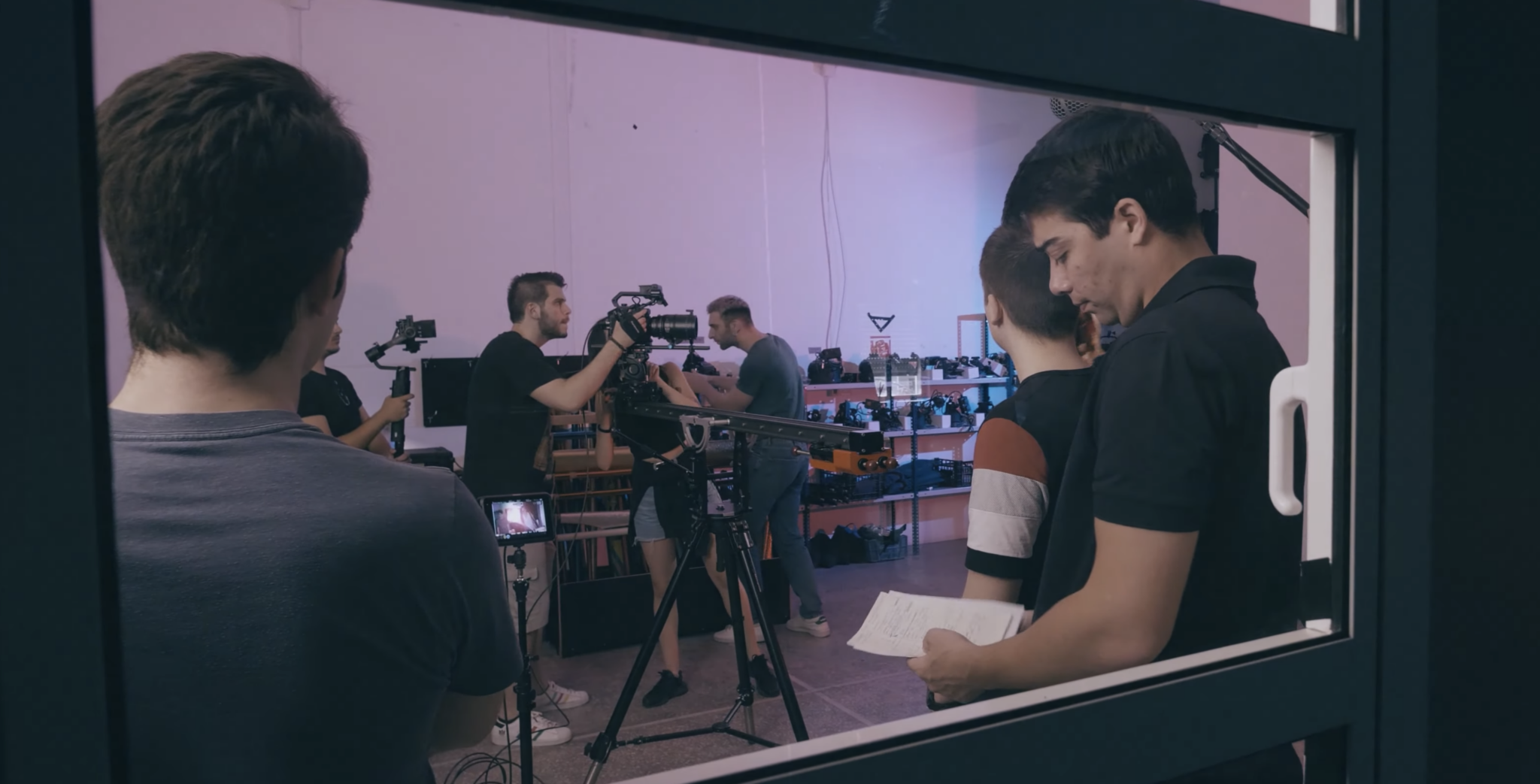
Establishment of the Department of Film Studies and the Department of Spatial Planning and Development Engineering.
AU is ranked among the top 100 universities worldwide in the Times Higher Education Young University Rankings.
AU participates in major Horizon 2020 research projects and becomes a member of the European Universities Initiative through the EPICUR Alliance, strengthening its European academic integration.
Launch of the Aristotle University School of Medicine (AUSoM), the first English-taught undergraduate program offered by a public university in Greece, marking a milestone in the global outlook of Greek higher education.
AU celebrates its Centennial Anniversary, standing as the largest university in Greece, with nearly 90,000 students and more than 1,500 international partnerships worldwide.
Join our
Community
At Aristotle University of Thessaloniki, everything we do
is guided by three simple ideas.
We learn by asking questions, not just collecting answers.
We research to understand the world — and to improve it.
We stay connected to society, so what we learn actually matters.
Education, research, and social contribution
are not separate paths here.
They come together in everyday academic life —
in classrooms, laboratories, and beyond the campus.